A Classics and Ancient History Blog

A blog about the Classical Studies or Ancient History in the Modern World with some emphasis on Latin and Ancient Greek.

Pages

  • Home
  • About
  • Ancient Humor
  • Latin
  • Greek

Tuesday, August 13, 2013

Medusa: Fame Only in Death


Medusa was one of three sisters born to Phorcys and Ceto known as the Gorgons. According to Hesiod's Theogany[1], the Gorgons were the sisters of the Graiai and lived in the utmost place towards the night by the Hesperides beyond Oceanus. Later authors such as Herodotus and Pausanias place the Gorgon's abode in Libya. The Gorgon sisters were Sthenno, Euryale, and Medusa, but Medusa was mortal while her sister were immortal.
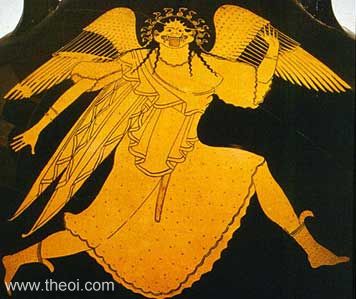
Museum Collection: The J Paul Getty Museum, Malibu, California, USA
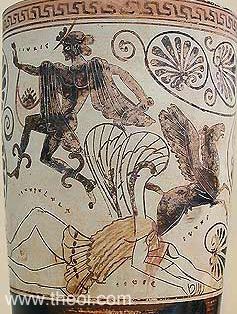
Attic Black Figure Amphora ca 530 BC 

Beyond the Gorgon's birth, there is little mention of the Gorgons as a group, but Medusa has several myths about her life and death. The most famous of these myths are concerning her death and demise. In Hesiod's Theogany[2], he recounts how Perseus cut off the head of Medusa and from her blood sprang Chrysaor and Pegasus. Chrysaor being a golden giant and Pegasus the famous white winged horse. The myth ,according to Pindar[3] and Apollodorus[4], of Perseus and Medusa started with a quest.


Perseus, with Athena, slaying the Gorgon Medusa (c. 560 - 550 bce)
Temple C at Selinus


 Perseus was the son of Danae and Zeus, who came to Danae in the form of a golden spring. It was foretold to Danae's father, Acrisius the king of Argos, that her son would kill him. So, Acrisius locked his daughter away in a bronze chamber, but Zeus transformed into a shower of gold and impregnated her. Acrisius not wanting to provoke Zeus; he hurled his daughter and grandson in a wooden chest into the sea. The mother and son were rescued by Dictys on the island of Seriphos. It was Dictys who raised Perseus to manhood, but it was Dictys' brother Polydectes, the king, who sent him on a life threatening quest.

 
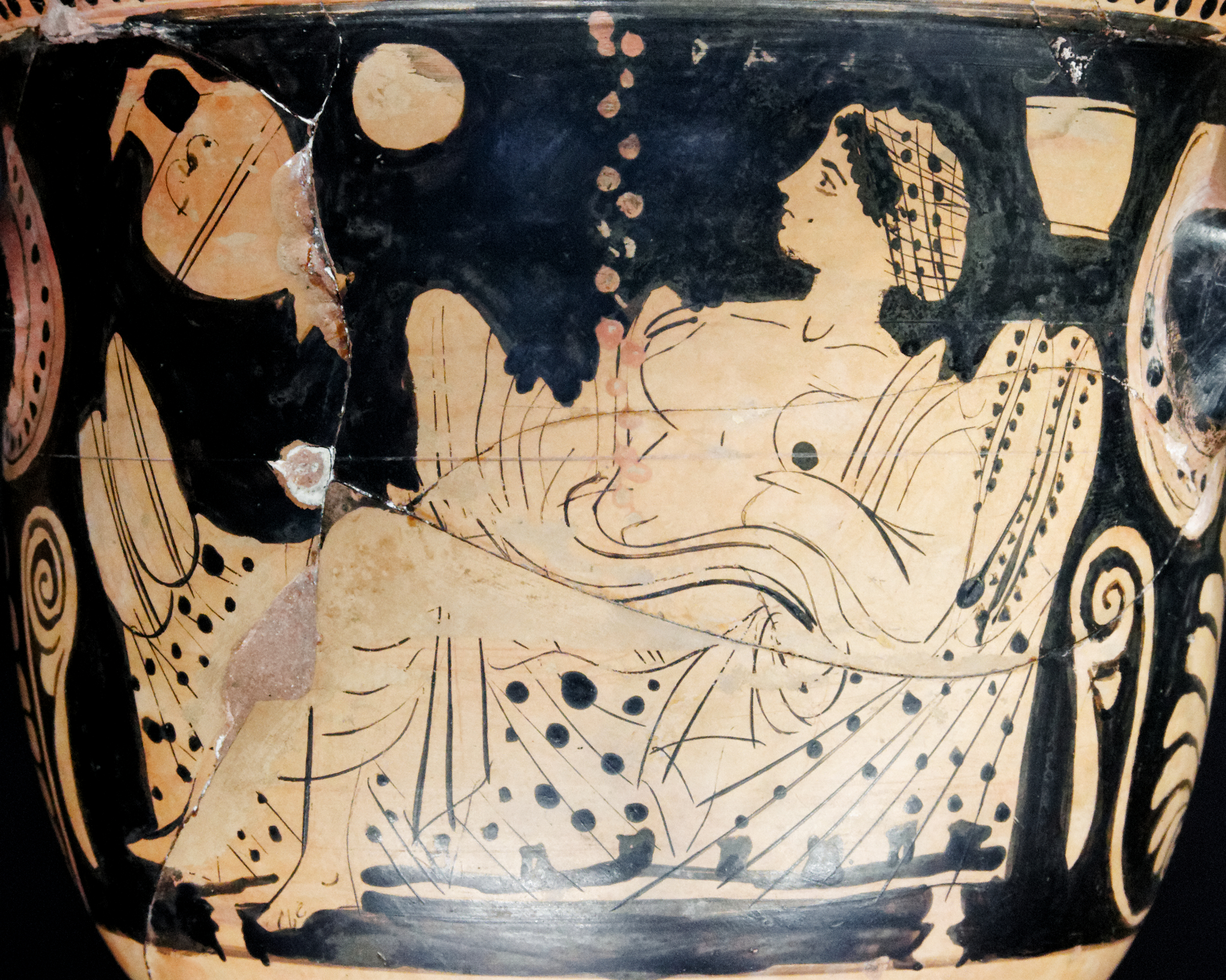
Danaë reclining with Zeus as the shower of gold depicted on a vase 450-425 BC
 
Polydectes fell in love with Perseus' mother and wished to marry her, but Perseus was protective of his mother since he believed Polydectes to be not honorable. Polydectes contrived to trick Perseus; he held a large banquet for the pretense of collecting contributions for the marriage of Hippodamia. He requested that his guests bring horses for their gifts, but Perseus did not have one. When Perseus confessed that he had no gift; he offered any gift the king would name. Polydectes seized his opportunity to disgrace and even get rid of Perseus and asked for the head of the only mortal Gorgon: Medusa.
 
 Medusa by Caravaggio (1573-1610)The Uffizi Gallery, Florence, Italy.
Medusa was a formidable foe, since her hideous appearance was able to render any onlooker into stone.[5] In some variation of the myth, Medusa was born a monster like her sisters described as girded with serpents, vibrating tongues, gnashing their teeth[6], having wings, brazen claws, and enormous teeth[7]. In later myths, mainly Ovid[8], Medusa was the only Gorgon to possess snake locks, because there were a punishment from Athena. Accordingly, Ovid relates that the once beautiful mortal was punished by Athena for having been raped in her temple by Poseidon with a hideous appearance and loathsome snakes for hair.

Medusa portrayed by Uma Thurman in the Percy Jackson Film Series
Perseus, with aid of divine gifts, found the Gorgons' cave and slays Medusa by beheading her. Most authors assert that Perseus was able to behead Medusa with a shield reflective bronze shield that Athena gave him while the Gorgons slept.[9] At the beheading of Medusa, her and Poseidon's children sprang from her severed neck: Pegasus and Chrysaor. Simultaneously with the birth of these children, Medusa's sisters Euryale and Sthenno pursued him. However, the gift bestowed to him by Hades, the helm of darkness, granted him invisibility. It is unclear if Perseus took Pegasus with on his following adventures or if he continued to utilize the winged sandals Hermes gave him. Pegasus' adventures have been recorded with both the hero Perseus and Bellerophon.
Perseus now flew (either by Pegasus or winged Sandals) with Medusa's head a bagged ever potent with its stony gaze. Perseus, on his journey home, stopped at Ethiopia where the kingdom of King Cepheus and Queen Cassiopeia was being tormented by Poseidon's sea monster: Cetus. Poseidon's vengeance was exacted for Cassiopeia's hubristic claim of her daughter, Andromeda, being the equal in beauty to the Nereids. Perseus slew the beast and won Andromeda hand. Although, Andromeda was already betrothed which caused a contestation to break out resulting in Perseus using Medusa's head to turn her previous betrothed to stone.[10]


Ancient Corinthian vase depicting Perseus, Andromeda and Ketos. The inscriptions denoting the depicted persons are written in an archaic form of the Greek alphabet and show some peculiarities such as the left-running direction in ΠΕΡΣΕΥΣ and ΑΝΔΡΟΜΕΔΑ, usage of Epsilon instead of Eta in ΚΕΤΟΣ, the employment of the letter San instead of Sigma in ΠΕΡΣΕΥΣ and ΚΕΤΟΣ and different shapes of the letters such as B for Ε or V for Υ.
Altes Museum, Berlin
Before his return to his home of Seriphos, Perseus met the titan Altas who he turned to stone with Medusa's head after some quarrelsome words[11]; thus creating that the Atlas Mountains of North Africa. Also during the journey home, Medusa's head spilled some blood on the Earth which formed into Libyan vipers that killed the Argonaut: Mospos[12].

 
Perseus showing Atlas the head of Medusa, by Bauer (1703 edition), from the University of Vermont Ovid Project: Metamorphosing the Metamorphoses
Perseus returned home to his mother safe from King Polydectes' advances, but Perseus was infuriated with Polydectes trickery. Perseus avenged himself by turning Polydectes and his court to stone with Medusa's head. He, then, gave the kingdom to Dictys.[13] After Perseus was finished with the Gorgon's head, he gave it to Athena, who adorned it upon her shield and breastplate.

Perseus shows the Gorgon's head to Phineus Painting by Luca Giordano.
 
The word Gorgon derives from the ancient Greek word "γοργός" meaning "fierce, terrible and grim."The Gorgons' names each have a particular meaning that helps to further describe their monstrousness. Sthenno from the ancient Greek "Σθεννω" is translated as "strength, might, or force," since it is related to the Greek word: σθένος. Euryale is from the ancient Greek "Ευρυαλη" meaning "broad, wide-stepping, wide threshing;" however her name may also mean "of the wide briny sea." This would be an appropriate name since she is the daughter of ancient sea deities: Phorcys and Ceto. Medusa's name comes from the ancient Greek verb "μέδω"which is translated as "to guard or protect." Medusa's name is extremely fittings as it is synonymous with what a Gorgon's head became representative of.

Athena depicted on an Attic red figure amphora from ca. 525 BC


The Gorgon image appears in several pieces of art and architectural structures including the pediments of the Temple of Artemis in Corcya, the cup by Douris, the Gorgon Medusa, and the Medusa mosaic. The Gorgon became a popular shield design in antiquity along with being an apotropaic (warding evil) device. The goddess Athena and Zeus were often portrayed with a shield (or aegis) depicting the head of Gorgon, who is typically believe to be Medusa. There are several archaeological examples of the Gorgon's face being used on shields and even breastplates. The most famous example of these would be the Athena Parenthos from the Acropolis made by Phidias and described by Pausanias[14]. This statue of Athena depicts a Gorgon's face on the goddess' breastplate. There is, also, Hesiod's description of Herakles shield which describes the events of Perseus and Medusa.


[1] Hesiod, Theogony 270 ff (trans. Evelyn-White) (Greek epic C8th or C7th B.C.) :
[2] Hesiod, Theogony 270 ff (trans. Evelyn-White) (Greek epic C8th or C7th B.C.) :
[3] Pindar, Pythian Ode 12. 8 ff (trans. Conway) (Greek lyric C5th B.C.)
[4] Pseudo-Apollodorus, Bibliotheca 2. 36 - 42 (trans. Aldrich) (Greek mythographer C2nd A.D.)
[5] Dictionary of Greek and Roman Biography and Mythology.
[6] Scut. Here. 233
[7] Aechlysus Prom, 794
[8] Ovid, Metamorphoses 4. 770 ff (trans. Melville) (Roman epic C1st B.C. to C1st A.D.)
[9] Number 4 & 8
[10] Ovid, Metamorphoses 5
[11] Ovid Metamorphoses 4
[12] Apollonius Rhodius, Argonautica 4. 1505 ff (trans. Rieu) (Greek epic C3rd B.C.)
[13] Pseudo-Apollodorus, Bibliotheca 2. 46
[14] Pausanias, Description of Greece 1. 24. 7

Posted by Brittany Garcia at 12:43 PM No comments:
Email ThisBlogThis!Share to XShare to FacebookShare to Pinterest
Labels: Chrysaor, Gorgons, Hesiod, Medusa, Ovid, Pegasus, Perseus, Stone

Monday, August 12, 2013

Books, Movies, and Films in Latin!

Today, I am going to talk about Classical Latin within different types of mediums such as books, films, and music. While it is difficult to jump into any language without  knowledge of the language’s syntax or even vocabulary- it can sometimes be helpful to use pop culture to aid in learning a language.
Books are one resource for learning a language.
Now, of course, I can recommend books in Latin that were written by Classical authors such as: Vergil, Caesar, Cicero, Ovid, Augustus, Marcus Aurelius, and so on. And, you can read a selection of them here.

But for modern sources of learning, Amazon has a fine selection of books in Latin that are very enjoyable! These books include Winnie Ille Pu (Winnie the Pooh), Cattus Petasatus (Cat in the Hat) or even the French series (in Latin) Asterix Gallus.
While these book may seem a bit juvenile, they are a great place to start at! But, if you are feeling a bit adventurous you may want to start with: Harrius Potter et Philosophi Lapis (Harry Potter and the Philosopher Stone) or Hobbitvs Ille (The Hobbit).
In the links above, I have provided the small preview that Amazon permits of about six pages of the texts.  Sometimes, it is easier to comprehend the Latin when it is next to an English translation in order to observe the similarities between the languages as can be seen here in this text of Harrius Potter.There is a previous blog post on Latin books in Transparent Language’s Latin Blog Learning Latin by Reading.


Movies and Films are another resource for  language learners.
Movies in Latin are actually quite rare, but a short list was complied on IMDB a few months ago. An explanation of the movies may be found from clicking on their individual links. The second film on the list is Carmina Burana (which means “Songs from Beuern”) is a compilation by Carl Orff derived from Latin medieval poems.  If you wish to watch the film (and I would recommend at least watching  the first song “O Fortuna” following along with lyrics), I have included it:


Furthermore, it is noteworthy to mention that the films Passion of the Christ and Gladiator (Latin script) were also made/translated into Latin.  Also, some films do include little pieces of Latin such as The Da Vinci Code,  The Godfather, The Sixth Sense, Tombstone and more.


This is a clip from Tombstone. At 1:40, Doc Holiday (Val Kilmer) and Johnny Ringo (Michael Biehn ) exchange conversation in Latin:
Doc Holiday: In vino veritas. “In wine, truth” [In takes an ablative (uino), veritas is nominative/subject, the verb "is" is omitted] English: In wine, there is truth.
Johnny Ringo: Age quod agis “Do! what you do” [ Age is the imperative/command form "Do!", quod means "what," and agis is related to Age from the verb ago  meaning "you do" second person singular.] English: Do it then what you do best (drinking)!
Doc Holiday: Credat Judaeus apella, non ego. “Apella the Jew may believe, not I.” [ Apella Judaeus is the nominative/subject meaning Apella the Jew, credit is a 3rd singular present subjunctive form that conveys may believe, non means "no," ego means "I."] *Apella the Jew was analogous of an “Average Joe.” English: The Average person may believe that (that drinking is what I do best), but I don’t.
Johnny Ringo: Eventus stultorum magister. “The teacher of fools is/are events.” [ Magister is the nominative/subject for Teacher, stultorum is the genitive plural masculine meaning "of fools," Eventus is plural accusative (Direct Object) masculine meaning events.] English: Fools learn from experiences.
Doc Holiday: In pace requiescat.  ”In peace, let him rest.  [In take an ablative (pace), requiescat is the 3rd singular subjunctive, but the subjunctive in this case is hortatory meaning "Let _ rest!; similar to "Let there be light!"] English: Rest in Peace!/ It’s your funeral.


Music and Songs are another great resource for new  language learners.
For music in Latin, Ave Marie (translation) is one the most popular songs. I have provided Andrea Bocelli performance at the Colosseum.


Concerning music, there are plenty of genres of music that have lyrics in Latin. Here is a nice complied list of songs, artists, genres, and lyrics. There are previous blog posts with lyrics in Transparent Language’s Latin Blog Music In Latin I & II.

Most of these are classical or religious songs, however there are some artists online who translate contemporary songs into Classical Latin. There is one artist that I wish to spotlight. This artist takes Disney songs and translates them into Classical Latin with  subtitles. This is a great way of learning Latin, since it is with common songs that most people have heard and can be paused and analyzed.
This artist has more videos including: the Little Mermaid, Hercules, Beauty and the Best, Mulan, Brave, Tangled, and the Lion King.


So, I do hope all these resources help and inspire you to continue learning Latin and seeing the connections with English. Feel free to comment and contact me for any questions on translations or sources.
Posted by Brittany Garcia at 2:38 PM 2 comments:
Email ThisBlogThis!Share to XShare to FacebookShare to Pinterest
Labels: Andrea Bocelli, Da Vinci Code, Harrius potter, Ille Hobitus, latin books, latin movies, latin music, lion king in Latin, Tombstone

Sunday, August 11, 2013

Is There is Any Advantages to Learning Latin

The following is a direct copy of my work at: Transparent Language Latin Blog

There has been much debate over the teaching and learning of Latin due to the language’s “supposed” uselessness. The fact that Latin has been categorized as a dead language ( which is defined as: “A language no longer in everyday use by a native population”) has often been a negative point in these debates. It has even lead to the British Museum hosting the academic debate earlier this summer: Does Latin have a Future?  So, the question must be posed “Is there any advantage to learning a dead language?”
Catholic Meme
Although, Latin is defined as a dead language due to the fact that is has no native population; it could be argued that the Vatican’s population and academics are Latin’s unconventional native population. Since Latin is spoken, taught, analyzed, and used almost everyday amongst these communities.  Regardless if Latin being spoken by 3 people or 3 million people, it is a language to be admired, esteemed, and prized.

 
A generated meme created at Philosoraptor
So, is there a point to learning a dead language? The BBC did the following survey:
While this survey of Latin’s validity seems to be mixed for the modern day person; beyond a doubt Latin’s prevalence within our society can be seen in phrases such as:  ”per se,” “carpe diem,” “pro bono,” “et cetera,” and ”ergo.” These are all Latin terms that people use everyday without even considering that they are speaking a dead language. Even more astonishing is the fact that most currency has Latin on it which goes unnoticed!

 
Links to a translation of Latin Money Terms
USELESSNESS & UFEFULNESS OF LATIN:
One key argument against Latin’s validity and usefulness in modern day society is: “How can it better an individual within modern society?” Since, Latin is not taught in every school, it is not a requirement for 95% of  schools or occupations, and it is so obscure and removed from society; it is considered outdated and antediluvian. Donald Clark posted the following in his blog regarding Latin: 10 Reasons to NOT teach Latin.
                                              Courtesy of Memegenerator.com

 
A great way of showing children Latin within literature.
Clark’s points seem to argue a negative perspective on aspects that have been proven otherwise on Latin’s resourcefulness: Helping you learn other languages, grammar, cognitive skills, et cetera (Latin for ”and the rest”). Moreover, Latin roots are used in everyday words and assist in learning new words with similar roots. Also, Latin has been proved to assist in increasing vocabulary as in this Iowa Study that saw a grade level improvement with middle school students who studied Latin for twenty minute daily sessions. And one more pro to learning Latin would have to be understanding Harry Potter spells:

 
How popular would you consider Facebook? I would argue that Facebook is one of the most used and popular social media sites. Facebook allows their users to use whatever language for their Facebook format…even Latin! So,do you have a Facebook account? Well, I dare you today to make a 24 hour commitment to change your language from English to Latin. Although it does not change everything from English to Latin, it is enough of a change that you notice differences, are able to understand some Latin, and increase your cognitive ability.  Go ahead try it and become a ”Dominus!” Also, give Latin Becomes a Living Language a read on Latin Lingua on Facebook.

"Uses Latin Language on Facebook....just like a Boss/ Master."
“Uses Latin Language on Facebook…just like a Boss/ Master.”
 
There are plenty of articles that recommend Latin for various reasons: Why Study Latin? However, I firmly believe that if you have the drive and passion to learn any language that you should pursue it. This passion and drive can be seen amongst the National Junior Classical League students who met for their annual competition. These students clearly LOVE Latin.  There is something unique with learning Latin, since I have never seen student this excited for modern or “alive” languages. A video of  the NJCL students can be see here.
Learning a new language at any point in life is great for your brain! In conclusion, I recommend Transparent Language  which offers some fine resources and products to learning a language in addition to their resourceful language blogs.
On my last note, I have covered so far some basics on Latin in the modern world from media resources to it’s validity. So, if anyone would like a discussion on a particular topics please comment, but if not I look forward to writing on a wide array of topics translating texts and artifacts from Ancient Roman Society.
Posted by Brittany Garcia at 5:02 PM No comments:
Email ThisBlogThis!Share to XShare to FacebookShare to Pinterest
Labels: Books, Dead Language, Latin, Latin a dead language, Learning Latin, Money Latin, Movies, Music, Vatican, Zombies

Thursday, August 8, 2013

Top Ten Most Scandalous Women of Ancient Rome

The following blog post is from my other blog, I manage, at Transparent Language Latin Blog

Ancient Rome was quite a scandalous time. While, we can not believe everything that is written in ancient sources; one must admit there are certainly some astonishing tales. So this month, this blog will be taking a look at some of the most infamous, malicious, scheming women from Ancient Rome.

NUMBER 10

Theodora, detail of a Byzantine mosaic in the Basilica of San Vitale, Ravenna
Name: Empress Theodora (500AD-548AD)
Vices:  Roman Actress (Prostitute), Defying an Emperor, Brothel Worker, Wit
Weakness: Responsibility, Stubbornness
Prime Examples: She became a prostitute out of necessity(to support her family), but pursued the scandalous lifestyle even when she left her family. In the Secret History, she was recorded for her indecent exposure, theatrics, sexual services off the stage, and even her lecherous portrayal of “Leda and the Swan.” Emperor Justinian I, so enamored with her, repealed the law that government officials could not marry actresses in order to marry her and even treated her illegitimate daughter and grandson as legitimate children.
Ergo:  Theodora places 10th on our list due to her “low” beginnings, although she only began working as a prostitute and “actress” to support her orphaned sibling and herself. History regards Theodora as a great empress of Rome, who was strong, courageous, intelligent, and decisive(i.e: she saved Justinian’s throne in the Nika Riots and was firm in religious policy even if it opposed Justinian). History does not implicate that she was an plotting woman, but it is not difficult to discern that a former “actress” could seduce the emperor, persuade him to change laws to marry her, make her queen, and give her power to rule. Click here to read more of her life story.


NUMBER 9
Faustina the Younger Marble, ca. 161 AD. Courtesy of ChrisO.
Name: Faustina the Younger (125-130AD-175AD)
Vices: Ordering Death Sentences, Poisoning, Promiscuity, Excessive Adultery, Inciter of Revolutions
Weakness: Self-Control, Victim to Gossipy Literature, and Insatiable Lust
Prime Examples: Although Faustina the Younger was given various titles of honor such as Augusta and Mater Castorum (Mother of the Camp), she has also been recorded as a woman of shameful lust and murder. Cassius Dio records that Faustina, wife of Emperor Marcus Aurelius, ordered the deaths of several people by poisoning or execution and he claims that she had affairs with sailors, gladiators, and even soldiers (This give the title Mater Castorum a new meaning). She , also, was accused of inciting a revolution between her husband and Avidius Cassius.
Ergo:  Due to her promiscuity and willingness to kill for power, Faustina has made this list of infamous and devious women. However, the sources on her infamy and scandal are somewhat uncertain and this is why she is in 9th place.  You can read more here.

NUMBER 8
 
Fulvia with the Head of Cicero by Pavel Svedomsky.
Name:Fulvia Flacca Bambula (83BC-40 BC) a.k.a Fulvia
Vices: Gang Leader, Manipulator, Political Match-Maker, Mutilation, Jealousy
Weakness: Power, Politics, and Marc Antony
Prime Examples:  Fulvia used marriage to acquire power.  She acquired the loyalties of a gang or collegium from her first husband, money from her second, and she did not survive her third husband; Marc Antony. According to Plutarch, she was a mass manipulator who was responsible for rendering Marc Antony easily controllable by women (Now, we know who Cleopatra should thank!). Furthermore,  Dio reports that she pierced the tongue of the decapitated head of Cicero out of disdain. Also, in Appian’s Civil War, Fulvia’s  jealous supposedly fueled the tension between Lucius and Octavian against Antony thus sparking the Perusine War.
Ergo: Fulvia earns the 8th spot in this countdown for her immoral actions all for the sake of power.  Even though a highborn woman, she went through husbands as a gold-digger, allowed her jealous to fuel a war, performed wanton violence against a dead man’s head, and manipulated all those around her for power.  You can read more on her here.

Lucrecia as St. Catherine of Alexandria in a fresco by Pinturicchio, in the  apartments at the Vatican c. 1494
Lucrezia in a fresco by Pinturicchio. c. 1494
 HONORABLE MENTION OF THE WEEK 
Name: Lucrezia Borgia (1480-1519)
Vices: Poisoner, Murder, Incest, Adultery
Weakness: Family
Prime Examples: As seen within Showtime’s Borgia, Lucrezia was a pawn within her family’s politics and social climbing. She was daughter of the Pope Alexander VI and was married off to any man that would ameliorate their family. It also rumored that she had incestuous relations with her brother. More of Lucrezia’s life can be read here.
Ergo: Although Lucrezia is not ancient, she encompasses the idea: “Don’t Mess with Roman Women” (Albeit, the Borgias are from Spain; Lucrezia was born near Rome.), because Rome seems to breeds murderous women who use seduction, poison, and their cunning wit to achieve power.

Next week we will be looking at #5-7; who do you think made that list?
Posted by Brittany Garcia at 1:25 PM No comments:
Email ThisBlogThis!Share to XShare to FacebookShare to Pinterest
Labels: Adultery, Ancient Rome, Faustina, Fulvia, Infamous, Murder, Poison, Prostitute, Roman Culture, Scandalous, Theodora

Saturday, July 6, 2013

Classicist verseus Ancient Historian

The age of question of what truly is the difference between these two types of academics.


I guess, it is all dependent on which side of the fence you are on.


An ancient historian may argue that there is no difference and that classicist simply choose to be termed "Classicist" out of tradition. A classicist may argue that their education is more traditional and beyond the mere memorization of facts.


While classics and history majors may attend the same lectures, classes, conferences, and so on; there is something to be said for a "Classics" education. Many view that Classics as being a gateway into other areas of study such as politic science, law, computers, education, and so on. It has been more heavily believe that a Classics education is more well rounded and suitable to an individual that may or may no know their end result- but knows "Dr." or "Supreme Court Justice" is in their future.

However, Classics students may have a sense of elitism that stems from their peers or even professors or advisers. However, it should be considered that most of the populace does not even care that there is a difference nor would they hire one over the other.


As contemporary student within academia, I have been asked several times what the difference is between Classics and Ancient History. I would have to respond that it is the language. I feel that Ancient History majors are not required nor do they have to train extensively in the ancient languages or texts.


As a Classicist one is expected to take the time to translate it themselves and then begin their proper work on philosophy, war tactics, and so on- using the translation they rendered. This is not the case for Ancient Historian who may pick up a well reputed and respected translation and read it in half or a quarter of the time and then begin their work.

I would also argue that Classicist are more concerned with the everyday life and society of ancient civilizations- almost closer to an anthropologist. And, that Classicist have a keener interest in philology. While, a historian may or may not concern themselves with these aspects.

More may be read on the subject at:Examiner: Classicist versus Historian
Posted by Brittany Garcia at 3:03 PM 2 comments:
Email ThisBlogThis!Share to XShare to FacebookShare to Pinterest
Labels: Classicist, Classics, Difference, Greek, Historian, Latin, Student, Translation, Versus

Thursday, June 27, 2013

Through Legos Antiquity Makes Advances

 
Legos were introduced in 1949 as a child's toy. Many adults today can recall playing with these rectangular shapes before they became so mainstream, or before there were idolized and "cool."
 
 
 Today, lego has begun its epic march to take over the world! They have marketed with films such as Star Wars, the Hobbit and LOTR, Indiana Jones, Harry Potter, DC Comics to create television shows, miniatures, collectibles, and video games.
 
 
As, a fan of certain films I own several Lego video games due to the clever nature of making an adult or even serious film (LOTR & Pirates of the Caribbean) approachable to a younger generation. They were require problem solving and logical thinking beyond mere chaos- but that is included as well!
 
 
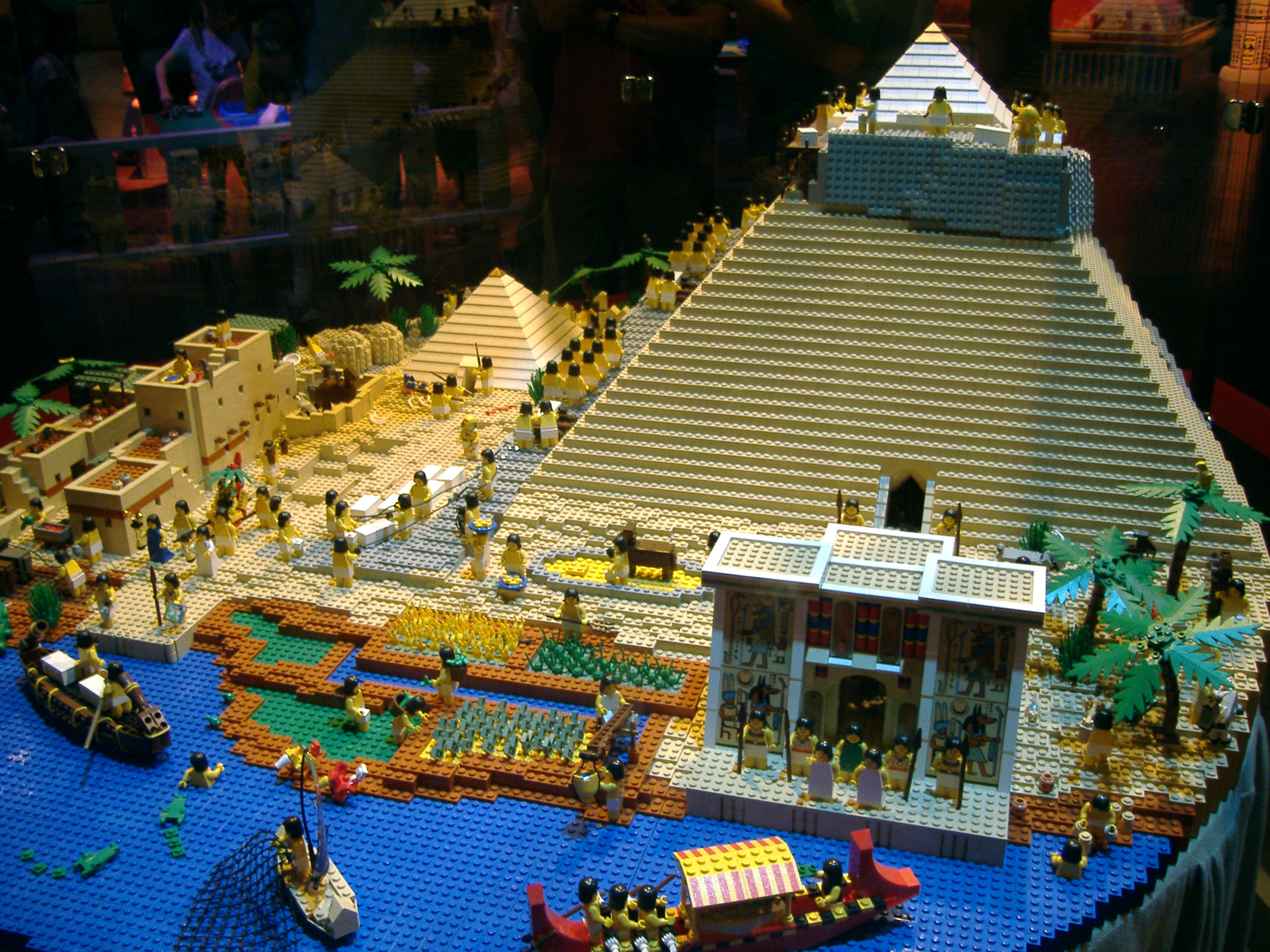
 As can be seen in the following images, Legos have become a new medium in which hobbyist will attempt to rebuild to scale various ancient sites or ideas:
Gladiators
 
Colosseum
 
Colosseum and Arch of Titus
 
Inside the Colosseum
 
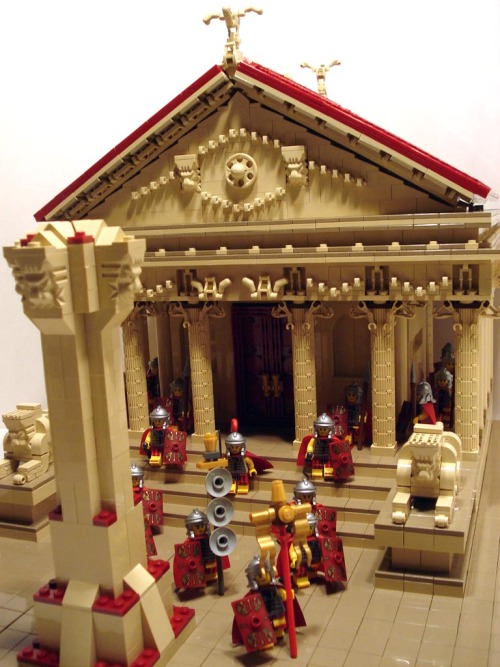
Roman Temple
 
Greek Doric Temple
 
Acropolis
 
Plato's Cave
 
Athens: Agora, Acropolis (Parthenon) and the Theater of Dionysus
 
Building of a Pyramid along the Nile 
 
There is much educational usefulness in having students of any age build such replicas. Beyond the mathematical scale knowledge, it takes some knowledge in order to realize what colors, size, or even trees would be populating an area. One would have to research if the placement of a certain type of boat or body of water was realistic or simple extra flourishing.


Legos are assisting the ancient world through these types of builds to excite young people about the history. However, for actual Classicist and Historians, Legos are advancing our understanding of the mysteries of the Ancient World.

 
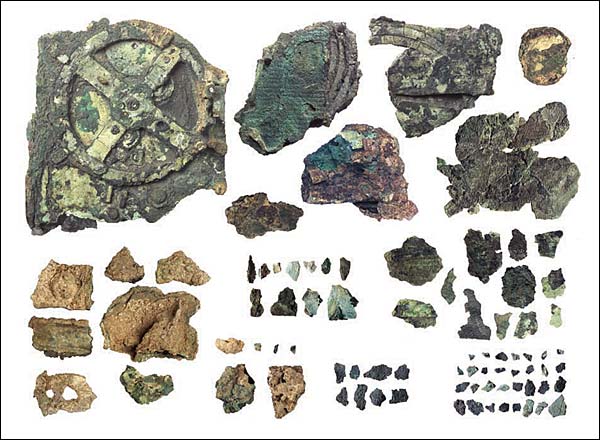
 The above video showcases how Legos were built to show a demonstration of the use of a very mysterious artifact known as the Antikythera Mechanism.

Antikthera Mechanism Remains

  "The Antikythera Mechanism is argued to be the world's oldest known computer, this ancient Greek invention was used some time circa 100BC to calculate and "predict celestial events and eclipses with unprecedented accuracy." Skipping past the two millennia in which it lay lost on a sea floor somewhere, the Mechanism has now been recreated by an Apple software engineer by the name of Andrew Carol, who has lovingly pieced 1,500, Lego Technic blocks together, creating 110 gears and four gearboxes in total." Courtesy of Engadget  Vlad Sovov.
Posted by Brittany Garcia at 2:00 PM No comments:
Email ThisBlogThis!Share to XShare to FacebookShare to Pinterest
Labels: Ancient Greek, Ancient History, Ancient Roman, Antikythera Mechanism, Civilizations, Classics, Harry Potter, Lego, Legos, LOTR

Wednesday, June 26, 2013

Artemis and Actaeon

ARTEMIS & ACTAEON 
 
 
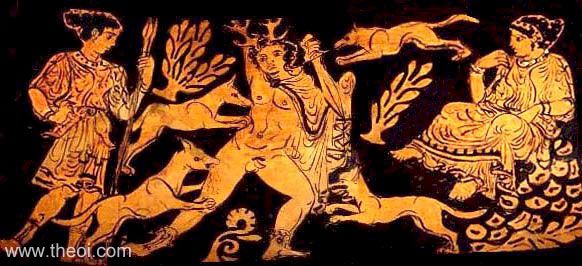
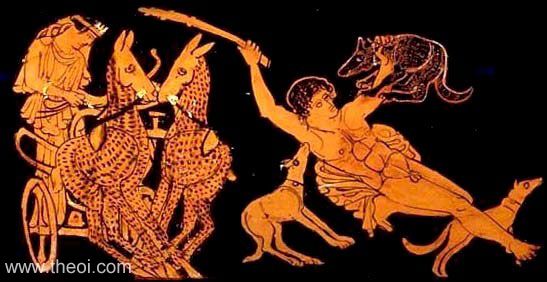
The story of Artemis and Actaeon is one of warning. Artemis was the virgin goddess of the hunt, and upon Acteaon ( a young hunter) spying on her bathing nude- she turned him into a stag- and his own dogs devoured him as reparation.
 
The following picture links to a three minute video showcases:
Pushing Daisies' Anna Friel plays Diana to Eragon and Downton Abbey star Ed Speleers' Actaeon in Metamorphosis, a short film inspired by Titian's paintings about the mythology hunter who spies the naked, bathing goddess.


ca 350 - 340 BC
 
 
ca 460 - 440 BC


Here is a much happier takes on the myth:


Posted by Brittany Garcia at 10:30 AM No comments:
Email ThisBlogThis!Share to XShare to FacebookShare to Pinterest
Labels: Actaeon, Ancient History Blog, Anna Friel, Artemis, Classical Studies Blog, Ed Speleers, Metamorphosis, Ovid, Titan's Paintings
Newer Posts Older Posts Home
Subscribe to: Posts (Atom)

Translate

Blog Archive

  • ▼  2014 (13)
    • ▼  May (2)
      • The Similarities You Never Saw Coming
      • 5 Things You Didn't Know About Roman Fashion
    • ►  March (5)
    • ►  January (6)
  • ►  2013 (69)
    • ►  December (3)
    • ►  November (7)
    • ►  October (17)
    • ►  September (8)
    • ►  August (13)
    • ►  July (1)
    • ►  June (9)
    • ►  May (4)
    • ►  April (6)
    • ►  January (1)
  • ►  2012 (2)
    • ►  December (1)
    • ►  August (1)
  • ►  2011 (4)
    • ►  August (3)
    • ►  May (1)

About the Writer

Brittany Garcia is a 2012 graduate from the University of California Riverside with a Bachelor of Arts in Classical Studies and Comparative Ancient Civilizations.
She is currently a student at the University of California Riverside Extension Center taking Classical Greek and Classical latin courses.
She is currently in the process of applying to graduate programs for Classical Studies,Ancient History, and programs for Masters in Teach Latin and Classical Studies.

Popular Posts

  • 1-1,000,000 In Roman Numerals and in Latin
    This week we will be learning  Roman Numerals and their Latin names, so that later this month we can learn how to write dates in Latin using...
  • The Symbolism of Birds on Ancient Greek Grave Steles
    In this post, I argue that the portrayal of birds found on certain Ancient Greek steles is more than a mere representation of a pet. The a...
  • The Similarities You Never Saw Coming
    The popular book and television series, Game of Thrones, portrays a world rich with magic, adventure, romance, and history. While most fans ...
  • GRE:The effectiveness of a country's leaders is best measured by examining the well-being of that country's citizens.
    The effectiveness of a country's leaders is best measured by examining the well-being of that country's citizens. Write a respons...
  • Romulus and Remus
    The following is a definition submitted to the Ancient History Encyclopedia , which is a great free resources for students of any age. I...
  • Lions, Tigers, and Gladiators; Oh My!
        Gladiators       Everyone knows the iconic movie poster above. It invokes the idea and concept of gladiators. There is an u...
  • Famous People who Studied Latin, Greek, and the Classics
    Latin has long been argued by contemporaries to be a useless language. That the only worth of learning Latin is for a brief time it increa...
  • Heroes and Role Models reveal Society's Highest Ideals?
    Claim: The best way to understand the character of a society is to examine the character of the men and women that the society chooses as ...
  • 5 Things You Didn't Know About Roman Fashion
    1. Not everyone wore togas . Only free-born  men  were allowed to wear togas (as a sign of  citizenship), while women wore stolas. Prostit...

Essentials Sites to Classicist, Ancient Historians, or Lovers of History

  • Advice on Applying to Classical Studies Graduate Progams
  • APA Facebook
  • Archaeological Institute of America
  • British Museum
  • Chris Abani's Inspirational Words
  • Classical Studies Journals
  • Coursea (Offers free courses for credit/certification)
  • Getty Villa Website (Lectures, Performances, Exhibits)
  • Grad Cafe (A site used by applying students to graduate programs to post their acceptance, rejections, and funding news)
  • Guide to Greek Nouns, Pronouns, Adjectives, and Verbs
  • How to Write an Abstract by the APA
  • JSTOR (Database for Academic Articles-Universities will usually have a subscription)
  • Perseus Project (Great for Finding Greek and Latin texts)
  • The American Classical League
  • The American Philological Association Blog
  • Theoi Greek Mythology ( Great for Primary Sources, Artifacts, and Pottery)

Hospites

Blog Top Sites

Literature Blogs
blog directory
Watermark theme. Powered by Blogger.