Showing posts with label Ancient Greek. Show all posts

Tuesday, November 5, 2013

The Symbolism of Birds on Ancient Greek Grave Steles

In this post, I argue that the portrayal of birds found on certain Ancient Greek steles is more than a mere representation of a pet. The ancient grave steles that I would like to analyze are those of young children (and that of females).


Hadrian-age gravestone for the child Olympia.
  It is completely probable that these birds which are often categorized as "doves" or "rock doves" or "pigeons" could be pets, as seen in the following stele of a young girl with her favorite pet and toy:

Attic Grave Stele of a Young Girl, "Melisto", c. 340 BC
 
Melisto's stele shows  herself with a small doll and a dog. Neil and Oakley attests to the fact that birds, cats, dogs, and even weasel were the playmates of ancient Greek children, but this does not explain the abundance of birds on steles instead of cats, dogs, or weasels. One then has to make various assumptions such as; bird were cheaper and easier to keep, or birds were cheaper and smaller to carve on a stele than a weasel or cat. However, Neils and Oakley state something that struck a nerve with me;  "Birds were commonly depicted with children on gravestones, but usually there is only one. There apparently perceived by the ancients as appropriate playthings for the dead, possibly because they, like the souls of the dead, were able to traverse the planes to the underworld to continue to be playmates (307-8)." Neil and Oakley also attest to the intimacy of the act of playing for children. "Many toys used by children have been uncover in their graves, as well as the bones of their pet birds.(199)"

Girl with Toy Roller Chasing Bird

Does this suggest that similar to the Egyptians, that pets were killed and buried with children in order to accompany them to the afterlife? This then begs to ask the question of why just birds, why not- cats, dogs, weasels, or even slaves? Are the Greeks flirting with Egyptian ideals or is a bird so far from "human" that they do not matter? Are the bird represented on these stele meant to emulate a companion to travel with them on the journey to the underworld as well a Egyptian "ba" role?


Grave Stele of Little Girl
or
Dove Stele
ca. 450–440 b.c.
Greek Parian marble

 
Why then is this stele is called the "Dove Stele" I am not quite sure. I am not a ornithologist so I do not know how one type of bird is discernible from another on a surface such as marble. But, for the sake of this stele, let us say it is a dove. One must ask why a dove? And why two? When Neil and Oakley have already graciously explained that birds were commonly put on gravestones only as soloists.  But then again, perhaps I am being too... rigid in a realm of grief, mourning, and remembrance.

The iconography of doves in ancient Greece can be tied to Aphrodite. Furthermore, it is not difficult to discern how  symbolism of doves formulate, because it is very similar to their use and iconography today. The dove represents purity, loyalty, love, and perhaps even a innocence. Obviously, these aspect are all due to the dove's white feathers; however, Aphrodite's affiliation with the dove lead it to also have the context of: love, joy, beauty, procreation, and sexuality.  Now, children are not sexual nor have they procreated and perhaps this part of the sad irony (the fact that these girls will never become women, mother, grandmothers, and so on) of using a dove on a young girl's grave stele.

 Grave Stele of a Girl, Plangon
with a doll and goose.


I would like then to argue that birds on stele represent more than mere pets, companions to the underworld, a representation of the soul or "ba,"  or a sad sense of irony. I would attest that a practice in funeral stele, where children are depicted with birds is a customary one. Almost as a metaphoric ( and the cases where children were buried with birds; literal) sacrifice to the chthonic deities involved with the Underworld: Mercury, Pluto, Proserpina, etc. (Hades, Persephone)

The following steles depict both girls with siblings, "mothers" with children (presumably girls who died in childbirth with or not with the child), mothers and slaves.


Marble Grave stele of Mnesagora and Nikochares from Vari, Attica.
420-410 BC.


Funeral Stele Depicting a Mother, Child and Cockerel


Funeral Stele with Child and Seated Woman
 

Stele of Timarete holding a bird and
 small child reaching out for her.
430BC-400BC
It is an interesting concept that mothers would be depicted on these funeral stele in a similar manner to "girls." How does one become a "woman" in ancient society; well a woman is a grown female child who has assumed her responsibilities as a mother, wife, and daughter of her polis. But what happens to those women who do not have children? Or can not? Are they forever revered as girls? Do they assume non-reproductive roles for their society? A priestess? A healer? etc.


If one dies in childbirth although married, is one forever considered a girl? It is an interesting term and idea of where boundaries lie in society.


This may be a bit far fetched, but I was reading( somewhere) that birds usually white ones were given by the bride to the groom in wedding ceremonies. It was a testament of the bride's loyalty and sexual purity. Could it then not be taken that these "girls" or females who died in child birth were then buried with stele's depicting a bird as if an offering to Hades or some deceased boy in the underworld; so that in death they could be married and wedded?

Death is an odd and complex idea which no society has any direct doctrine written. There is a sense of family, loss, religion, acceptance, grief, anger, and agglomeration of various emotions and duties that lend it to be a byzantine ritual: burying the dead.


Sunday, August 25, 2013

The Lovers' Coin: Antony and Cleopatra


The Lovers' Coin: A Rare Discovery of a Mark Antony and Cleopatra Bronze Coin

Antony and Cleopatra by Lawerence Alma- Tadema; Courtesy of WikiCommons


The story of Marc Antony and Cleopatra is a love story of seduction, exotic locations, love-triangles, family, politics, war, and suicide. More importantly, their love affair was connected to the rise and fall of the Roman and Egyptian empire. It is easy to see how their love affair is intriguing tale for centuries worth of audiences from Plutarch's portrayal to Elizabeth Taylor's role to HBO's Rome Series. While there are countless of images produce of their romantic and tragic life; there something extraordinary in contemporary pieces that show both couples.

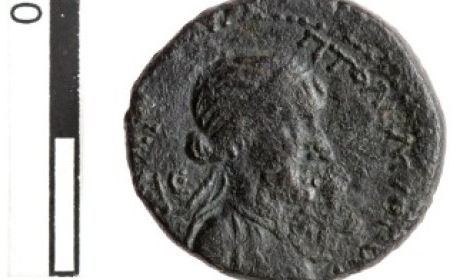
A recent archaeological discover in Tel Bethsaida (Northern coast of the Sea of Galilee) yielded a coin with the images of these notorious lovers. 


The Cleopatra and Antony side of the coin. Hanan Shafir. Courtesy of the Bethsaida Excavations Project


This coin found in Tel Bethsaida was actually minted in the port of Akko (known today as Acre). The coin is made of bronze, is approximately the size of a quarter (21-23 millimeters in diameter). It was minted in the last half of 35BCE and/or the first half of 34BCE. [1]


An side image of the Cleopatra side with a parallel image of the Greek letters outlined.


Cleopatra's side of the coin, it is somewhat unclear in the photo above, but one can see the Greek word: ΠΤΟΛΕΜΙδΣ .[2] This is the genitive form of the noun Ptolemais which means: "of the people of Ptolemais.[3]" Ptolemais is the name for ancient Akko, which was founded by Ptomlemy II Philadelphus in the 3rd century BCE.


"The cities of the ancient Middle East had a habit of minting coins bearing the portraits of whoever was in power," says Dr. Ariel, head of Israel Antiquities Authority Coin Department.[4] In 35 BCE, Antony's recent victory over the Parthians(Northeast Iran and Armenia), and his bestowing Armenia to Cleopatra's sons and Cyprus to her daughter may indicate why the ancient Middle East considered him powerful.[5]

Dating the coin was an interesting journey. Dr. Arav of the Bethsaida Excavations Project said the dating system was difficult to find. He continued to explain to me through our email conversations: On the Cleopatra side of the coin, there is a small I (iota) and E (epsilon). The Greek alphabet goes as follows : A=1, B=2, Γ=3, Δ=4, and so on. Thus, I and E in their numbering system are 10 and 5 respectively. Therefore, the I and E means 15.

However, what does the 15 mean? Dr. Arav explained that book research was essential in the following discovery: The people of Ptolemais valued greatly the event of Julius Caesar visiting the area to rid their waters of pirates. This event happened in 49BCE, the people of Ptolemais therefore used their dating system in reference to 49BCE. Thus, 49BCE being the starting date, 15 years later would be 35-34 BCE.


Dr. Ariel said, "Coins with the portraits of Antony and Cleopatra are extremely rare. Only six have been found anywhere in the world.[6]" However according to the ancient numismatic reference site Wildwinds.com, there have been more than six discoveries of Antony and Cleopatra coins.[7] Though, it would stand that only six of the eight coins are in good condition. This coin would make the seventh. However, it has to be asked if the ancient Middle East considered Antony and Cleopatra powerful in 35 BCE (and perhaps other years as well); why are there not more of these "lovers' coin?"

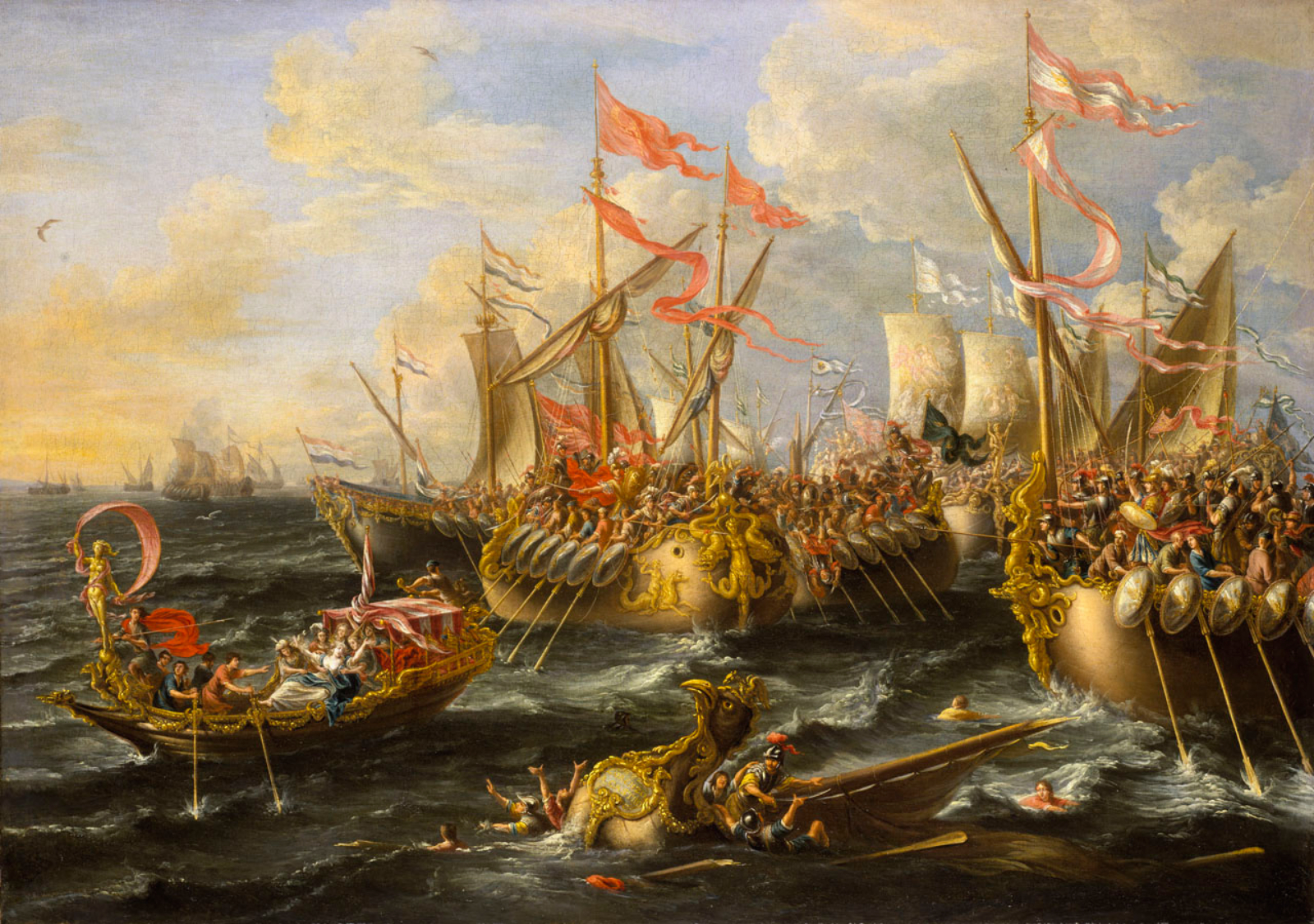
The Battle of Actium 2, September 31BC by Lorenzo A. Castro
Courtesy of Wikicommons

However, it is not difficult to hypothesize that Augustus Caesar may have had them collected and destroyed after his victory at Actium. Augustus after all did destroy Antony's portraits after his death, but for some reason allowed Cleopatra's statues to remain in Caesar's Temple to Venus Genetrix.[8] Perhaps, Augustus admired Cleopatra that as a foreigner her ambition, cunning, and wit were understandable However, his unforgiving attitude towards Antony may have had to do with his sister Octavia. Antony's affair with Cleopatra was at the expense of Augustus's sister and Antony's wife Octavia and their children. Cleopatra as a foreigner was understood to be less than a respectable being, but as a Roman male citizen Antony's actions were inexcusable.


Silver denarius of Cleopatra VII and Mark Antony , 30's BCE. Courtesy of the British Museum
It is these rare coins which provide a look into Antony's and Cleopatra's policy of their portrayal, features, and idealized form. It is uncertain whether they wish to emulate a certain presence, as is suggested by the British Museum," Antony was said to remind people of the Greek hero Herakles in paintings and sculptures, with '... a very good and noble appearance; his beard was not unsightly, his forehead broad, and his nose aquiline' (Plutarch, Life of Antony, 4). However, here his portrait seems to have picked up Ptolemaic features, specifically the strong projecting chin of Ptolemy I, the founder of Cleopatra's dynasty, and the hooked noses of Cleopatra and her father Ptolemy XII.[9]"

Thus, this infamous couple continues to engage, fill, and plague our minds. Though, they are long dead and their story known by most; they continue to be the topic of much discussion, debate, and obsession.

~~~~~~~~~~~~~~~~~~~~~~~~~

Main Sources & Contributors:

Private Correspondence with Dr. Arav

The ancient coin of Cleopatra: There could have been pyramids in Paris

By Miriam Feinberg Vamosh | Aug. 4, 2013 |http://www.haaretz.com/archaeology/.premium-1.539712

 1. Israel Antiquities Authority Coin Department

2. The Bethsaida Excavations Project

Secondary Sources & Contributors:

British Museum: http://www.britishmuseum.org/explore/online_tours/egypt/cleopatra_history_to_myth/denarius_of_cleopatra__antony.aspx

 
Liddell and Scott, Greek-English Lexicon,Oxford University Press, 1996

 
The Cambridge Companion to the Age of Augustus/edited by Karl Galinsky.Cambridge University Press, 2005

 Plutarch, Life of Antony, Cambridge University Press, 1988.


[1] Vamosh, "The ancient coin of Cleopatra: There could have been pyramids in Paris" |http://www.haaretz.com/archaeology/.premium-1.539712
 
[2] My own translation and identification of text in red.
[3] Liddell & Scott, Greek- English Lexicon, Oxford University Press, 1996
[4] Vamosh
[5] Plutarch Life of Antony, Cambridge University Press, 1988. Chapter 54
[6] Vamosh
[7] http://www.wildwinds.com/coins/sear5/s1515.html
[8] The Cambridge Companion to the Age of Augustus/edited by Karl Galinsky.Cambridge University Press, 2005
 
[9] British Museum: http://www.britishmuseum.org/explore/online_tours/egypt/cleopatra_history_to_myth/denarius_of_cleopatra__antony.aspx
 

Thursday, June 27, 2013

Through Legos Antiquity Makes Advances

 
Legos were introduced in 1949 as a child's toy. Many adults today can recall playing with these rectangular shapes before they became so mainstream, or before there were idolized and "cool."
 
 
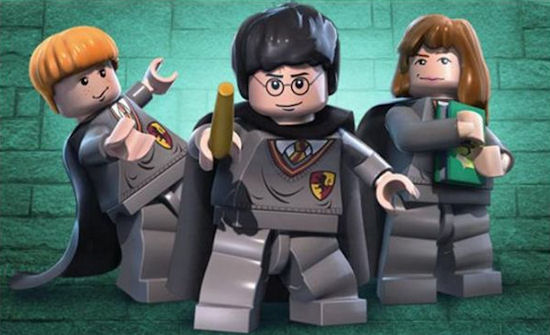
 Today, lego has begun its epic march to take over the world! They have marketed with films such as Star Wars, the Hobbit and LOTR, Indiana Jones, Harry Potter, DC Comics to create television shows, miniatures, collectibles, and video games.
 
 
As, a fan of certain films I own several Lego video games due to the clever nature of making an adult or even serious film (LOTR & Pirates of the Caribbean) approachable to a younger generation. They were require problem solving and logical thinking beyond mere chaos- but that is included as well!
 
 
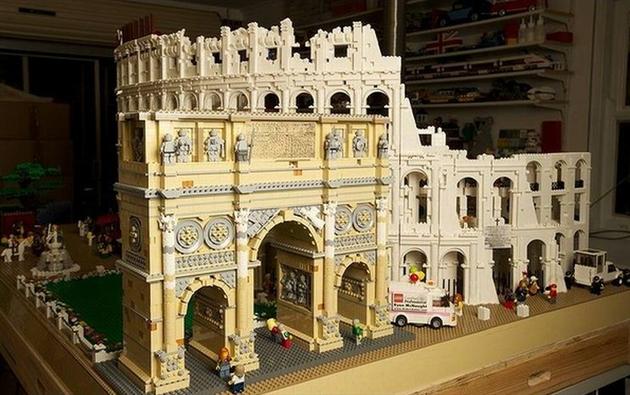
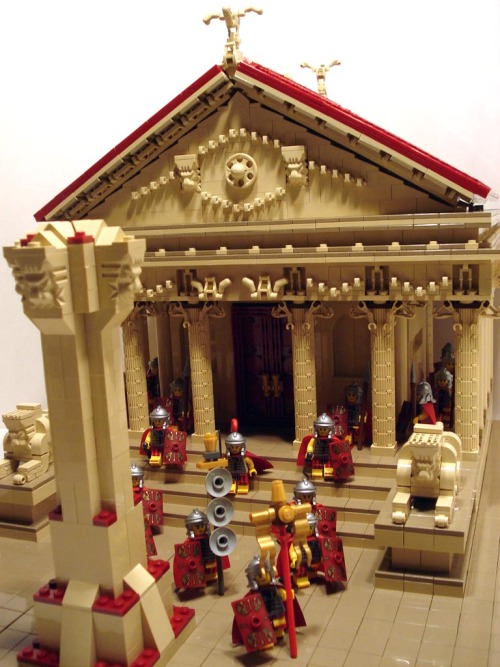
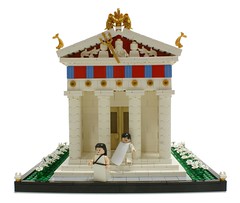
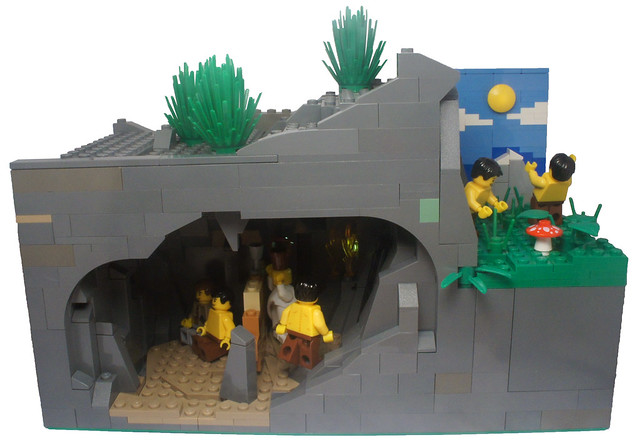
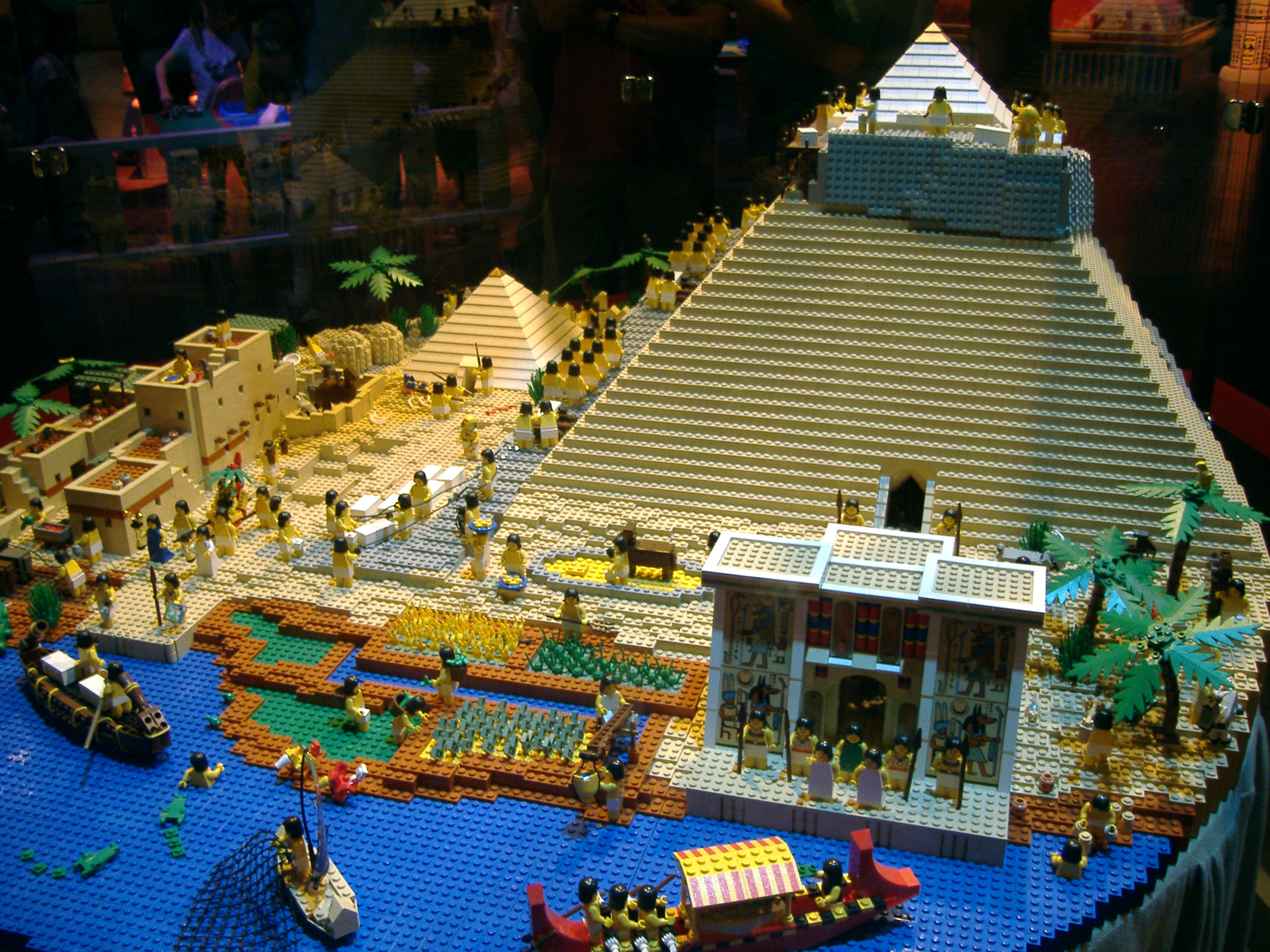
 As can be seen in the following images, Legos have become a new medium in which hobbyist will attempt to rebuild to scale various ancient sites or ideas:
Gladiators
 
Colosseum
 
Colosseum and Arch of Titus
 
Inside the Colosseum
 
Roman Temple
 
Greek Doric Temple
 
Acropolis
 
Plato's Cave
 
Athens: Agora, Acropolis (Parthenon) and the Theater of Dionysus
 
Building of a Pyramid along the Nile 
 
There is much educational usefulness in having students of any age build such replicas. Beyond the mathematical scale knowledge, it takes some knowledge in order to realize what colors, size, or even trees would be populating an area. One would have to research if the placement of a certain type of boat or body of water was realistic or simple extra flourishing.


Legos are assisting the ancient world through these types of builds to excite young people about the history. However, for actual Classicist and Historians, Legos are advancing our understanding of the mysteries of the Ancient World.

 
 The above video showcases how Legos were built to show a demonstration of the use of a very mysterious artifact known as the Antikythera Mechanism.

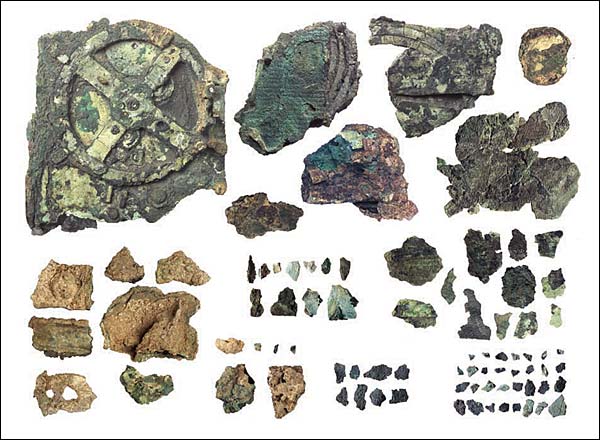
Antikthera Mechanism Remains

  "The Antikythera Mechanism is argued to be the world's oldest known computer, this ancient Greek invention was used some time circa 100BC to calculate and "predict celestial events and eclipses with unprecedented accuracy." Skipping past the two millennia in which it lay lost on a sea floor somewhere, the Mechanism has now been recreated by an Apple software engineer by the name of Andrew Carol, who has lovingly pieced 1,500, Lego Technic blocks together, creating 110 gears and four gearboxes in total." Courtesy of Engadget  Vlad Sovov.